
Adam Wills
Massachusetts Institute of Technology
Hon Hai Research Institute
arXiv:2603.04543 · FOCS 2026
Min-Hsiu Hsieh
Hon Hai Research Institute2026 YITP QEC Workshop:
Fault-tolerant logical processing
Massachusetts Institute of Technology
Hon Hai Research Institute

University of California San Diego
Hon Hai Research Institute

Massachusetts Institute of Technology

Hon Hai Research Institute
My Research Interest
Constructing
quantum
error-correcting codes
with different
properties.
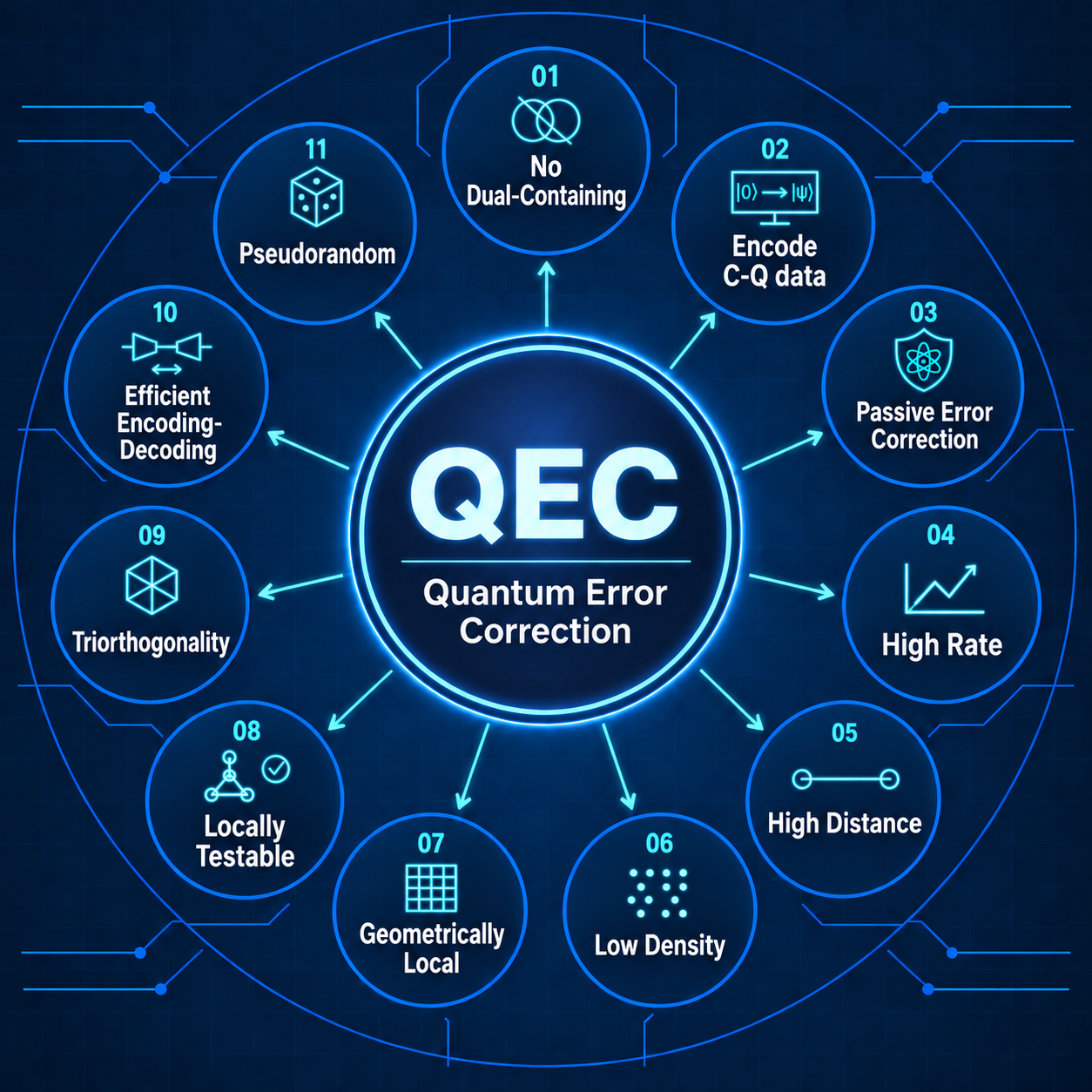


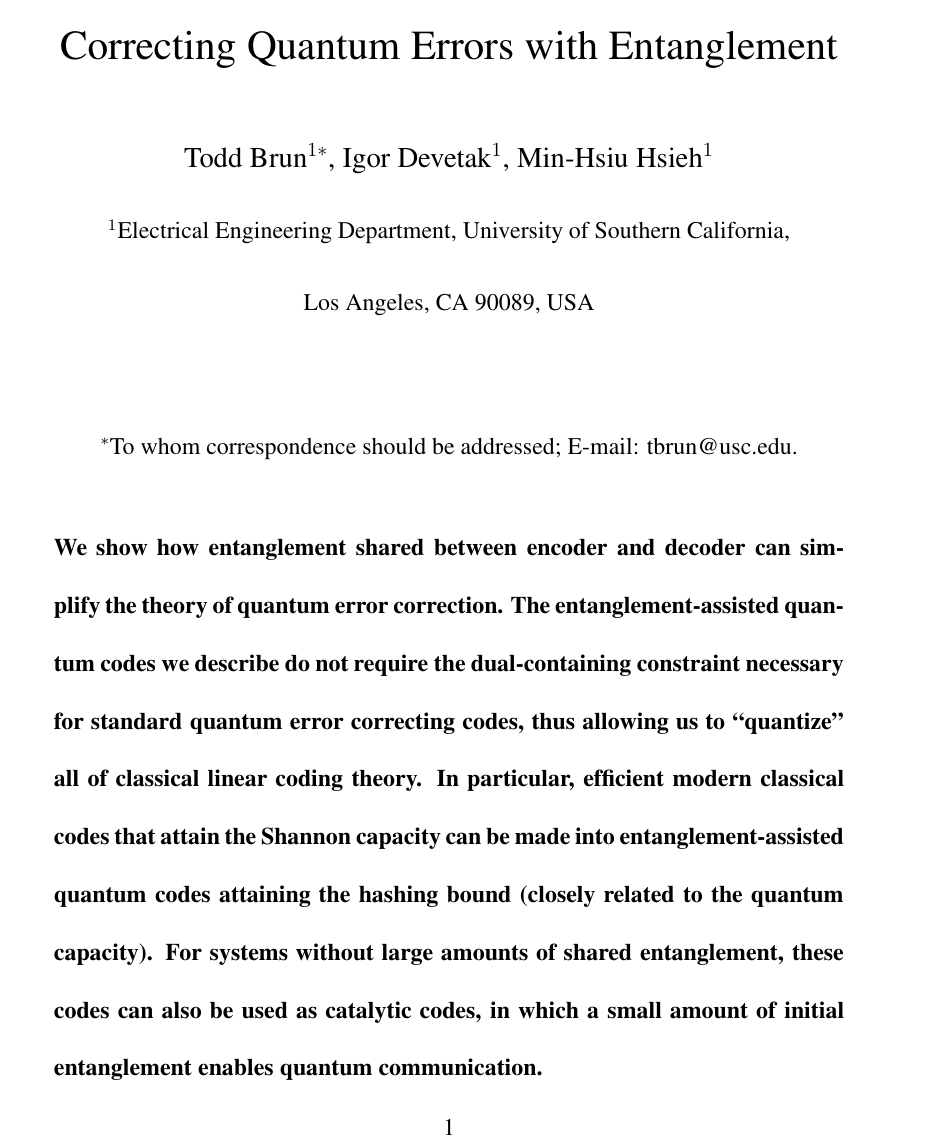
Shared entanglement turns classical linear codes into quantum codes without the dual-containing constraint.

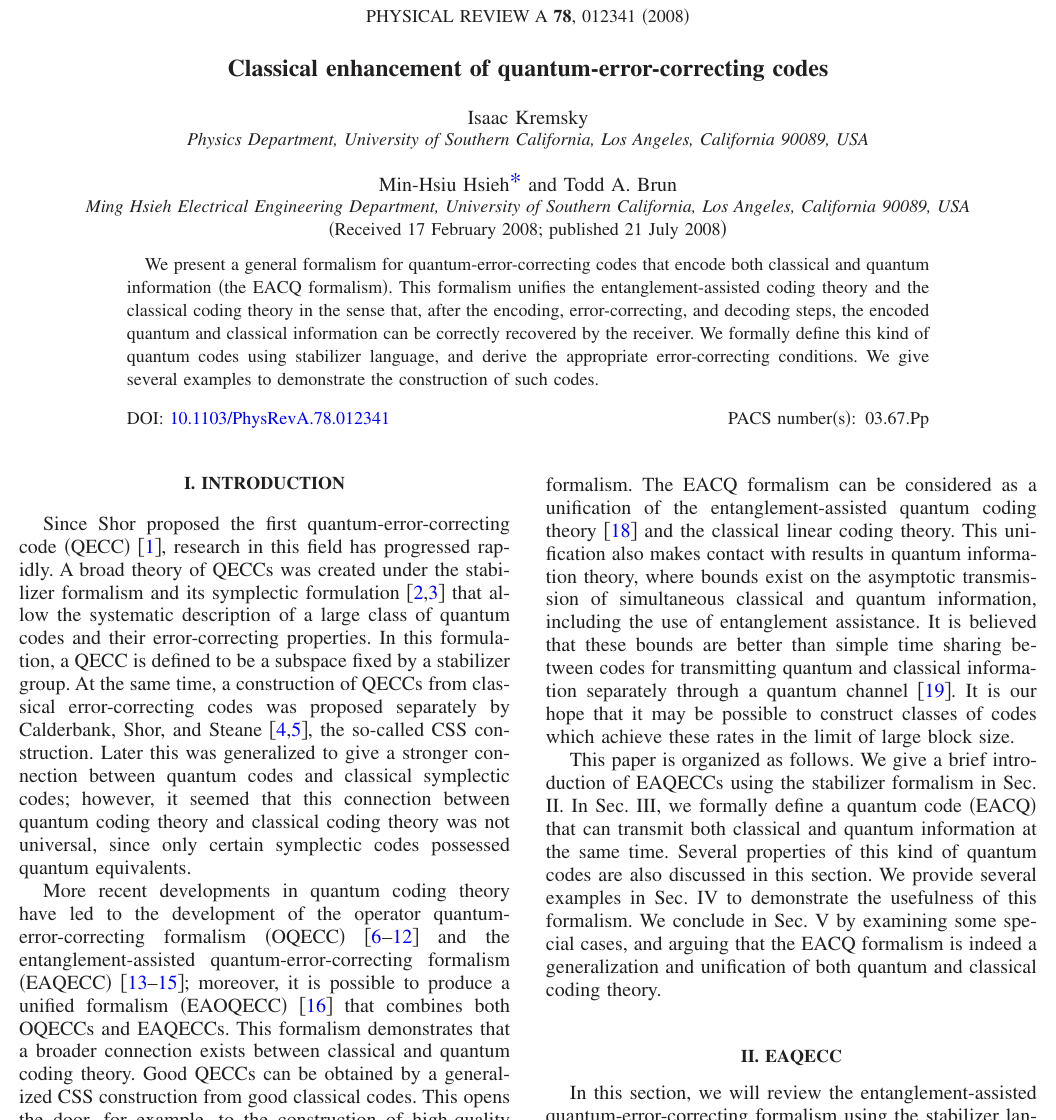
Entanglement-assisted codes jointly encode and protect classical and quantum information.
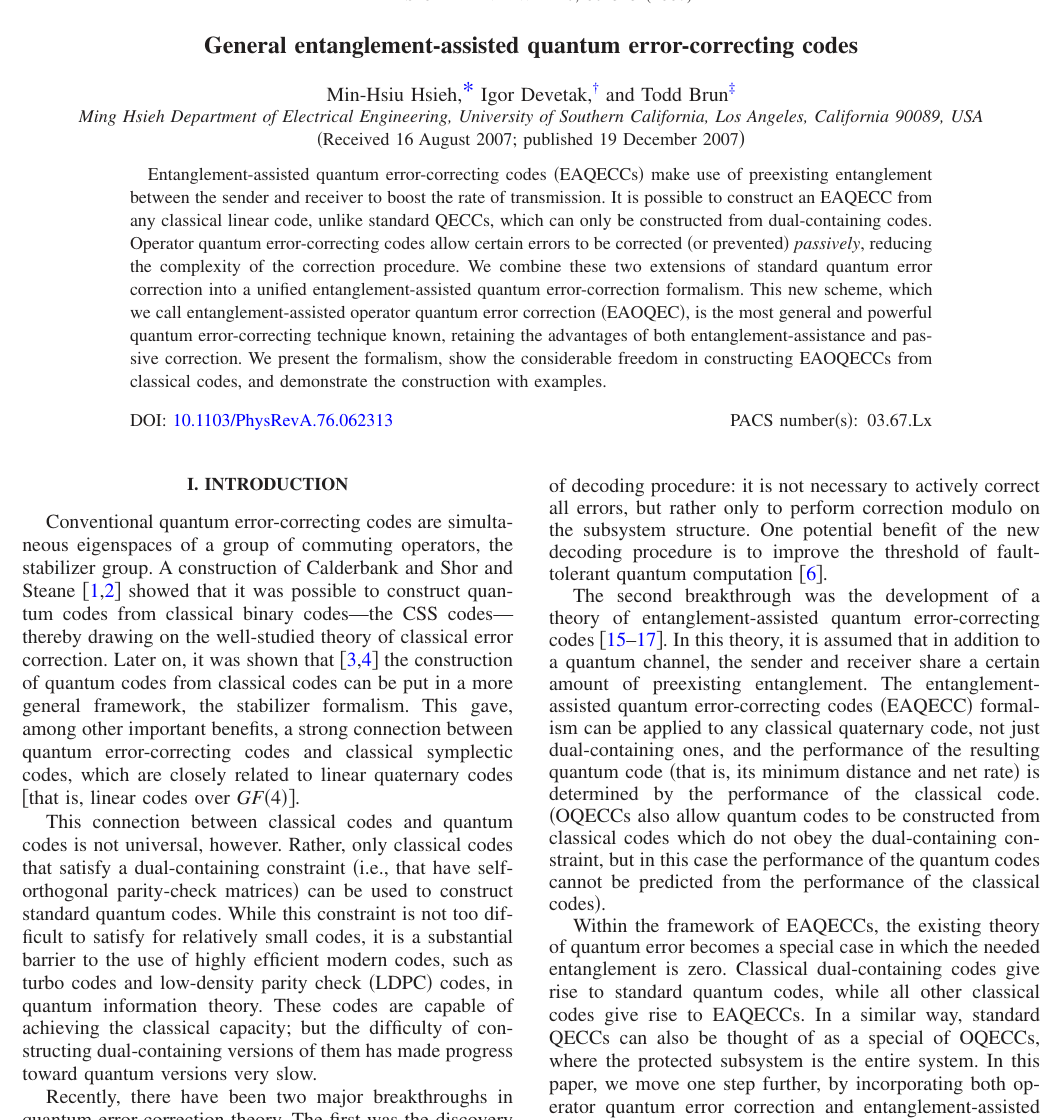
Entanglement-assisted operator codes combine flexible code construction and passive error protection.


Quantum LDPC codes achieve constant rate and linear distance, with linear-time decoding.
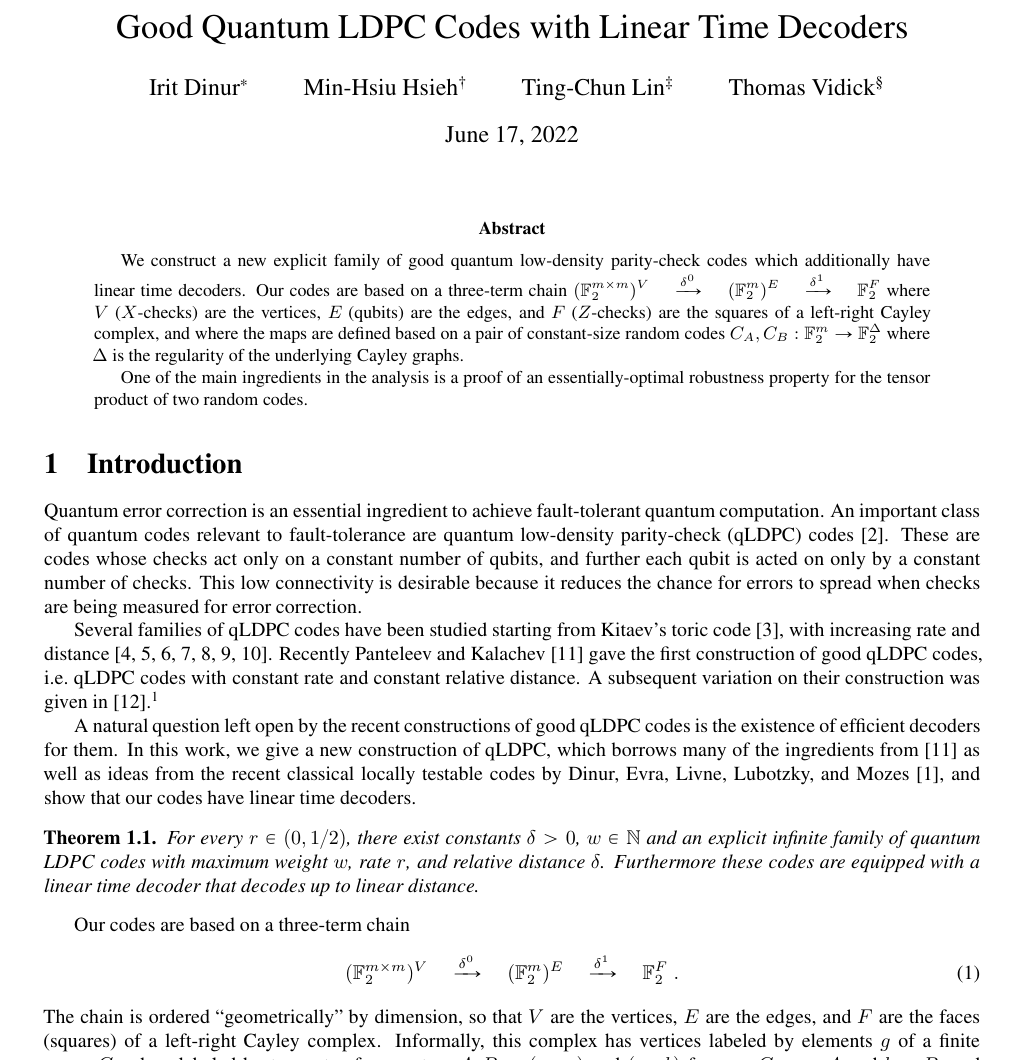

Transform arbitrary quantum codes into low-weight codes with check weight 5 and qubit weight 6.
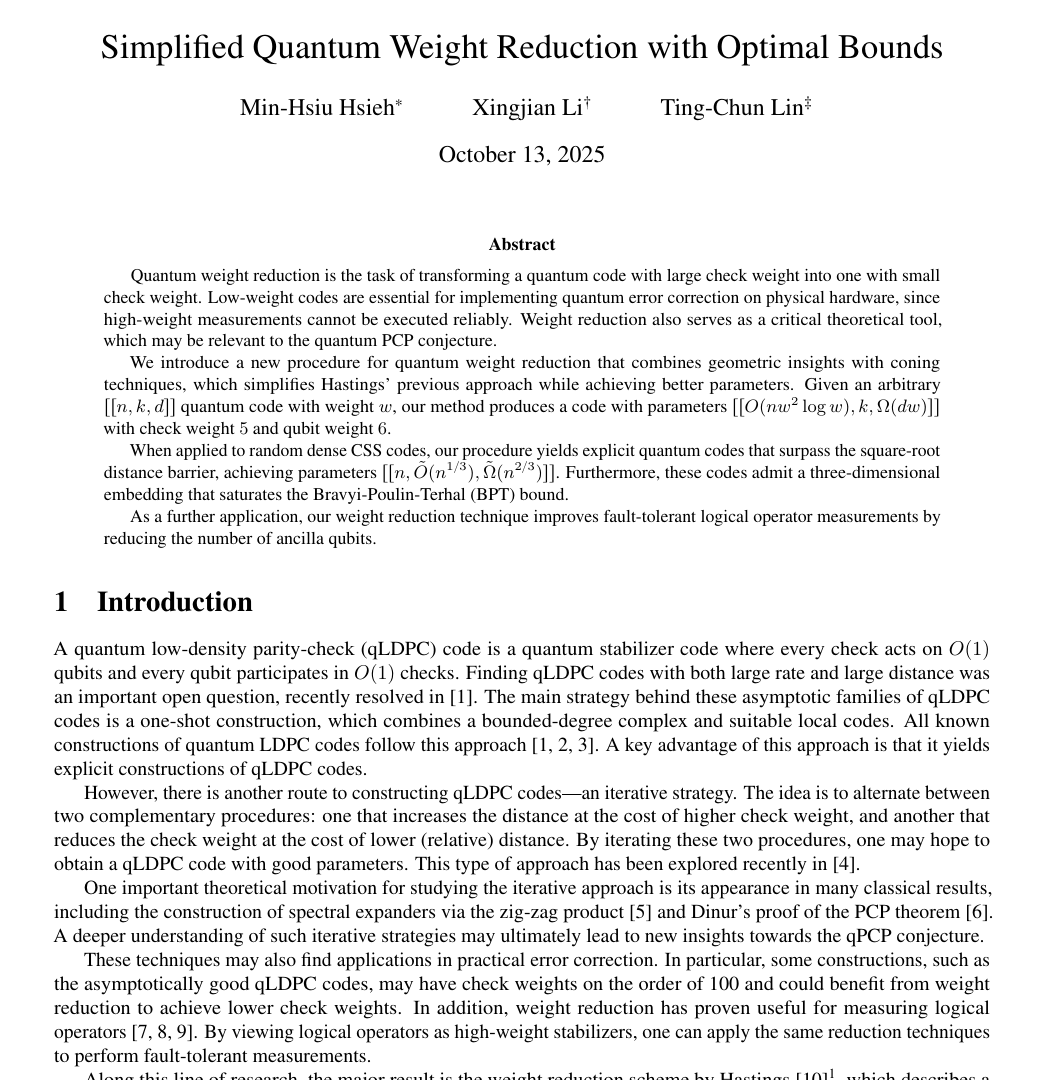
Turn good quantum LDPC codes into geometrically local codes with almost optimal dimension and distance.
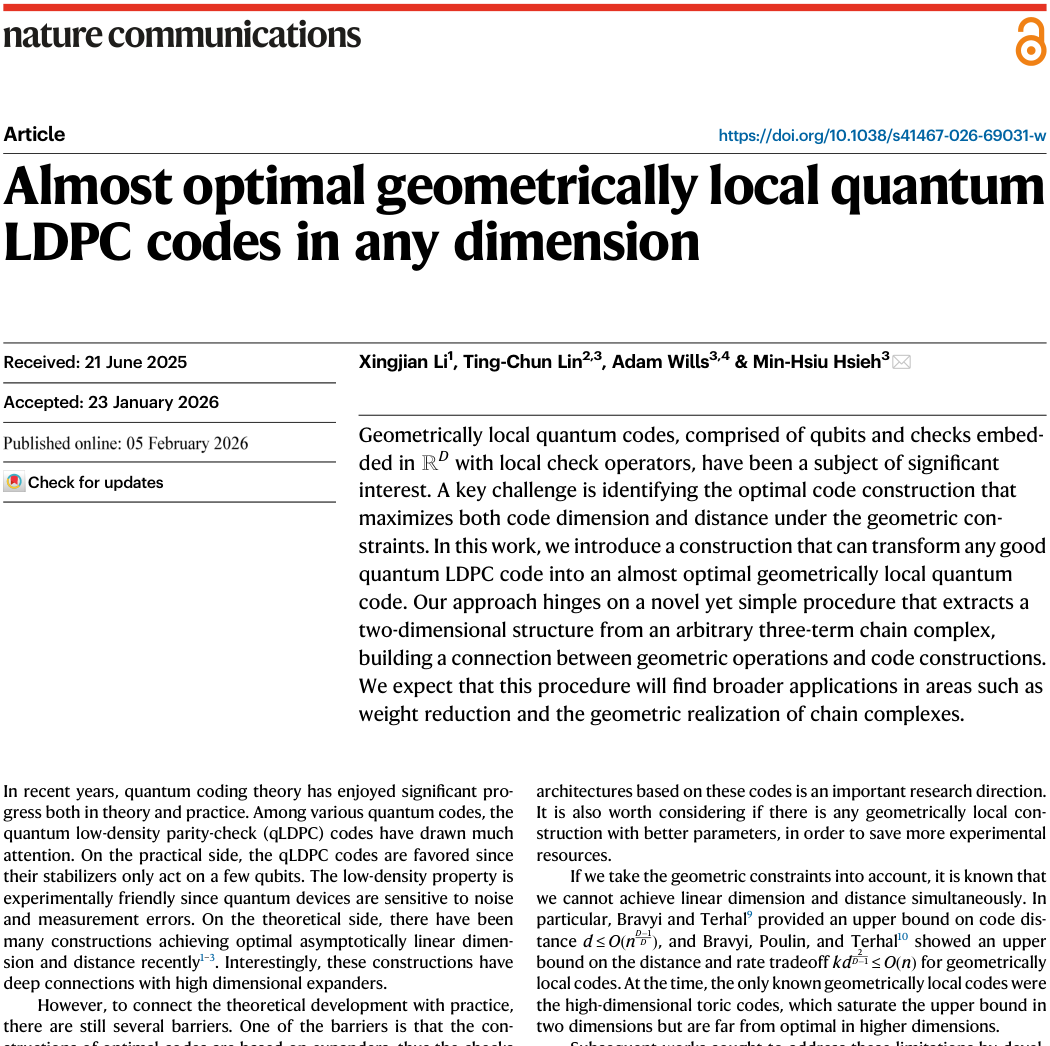
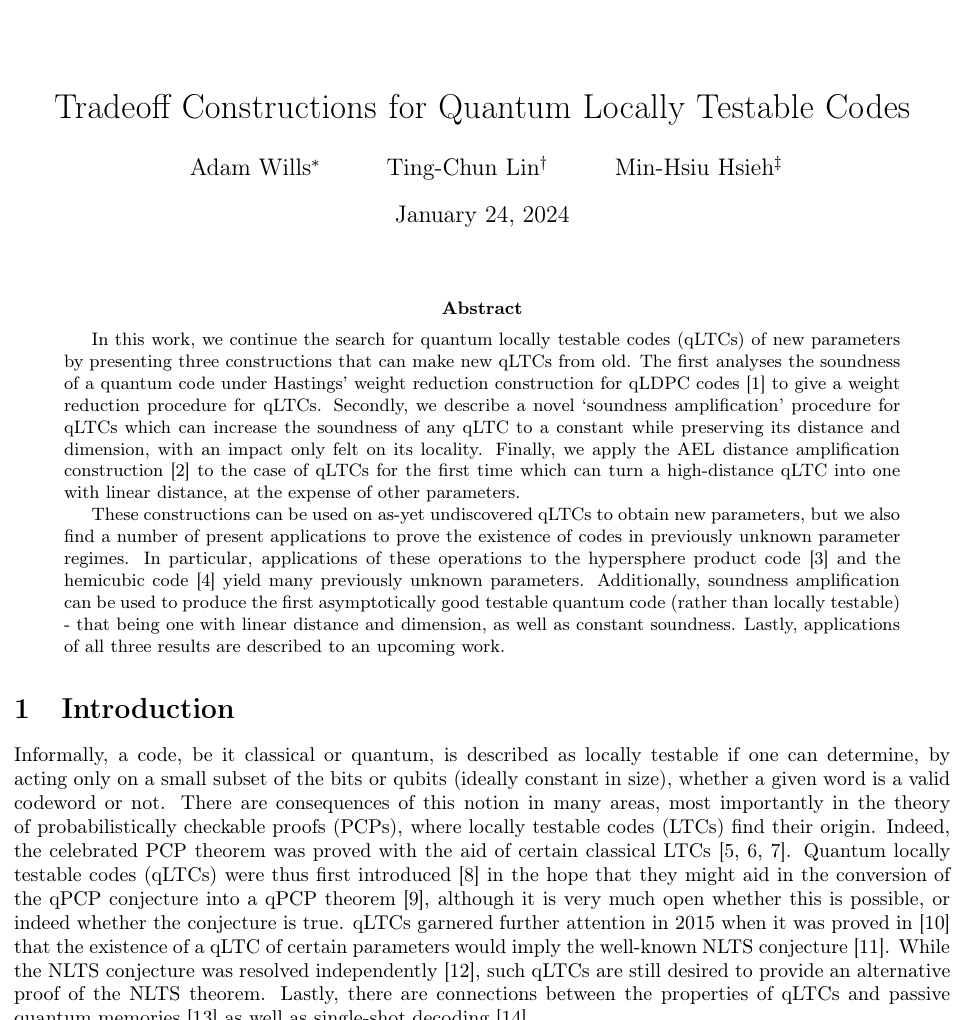
Amplify soundness while preserving dimension and distance, at the cost of check locality.

Good quantum codes with transversal non-Clifford gates enable constant-overhead magic state distillation.
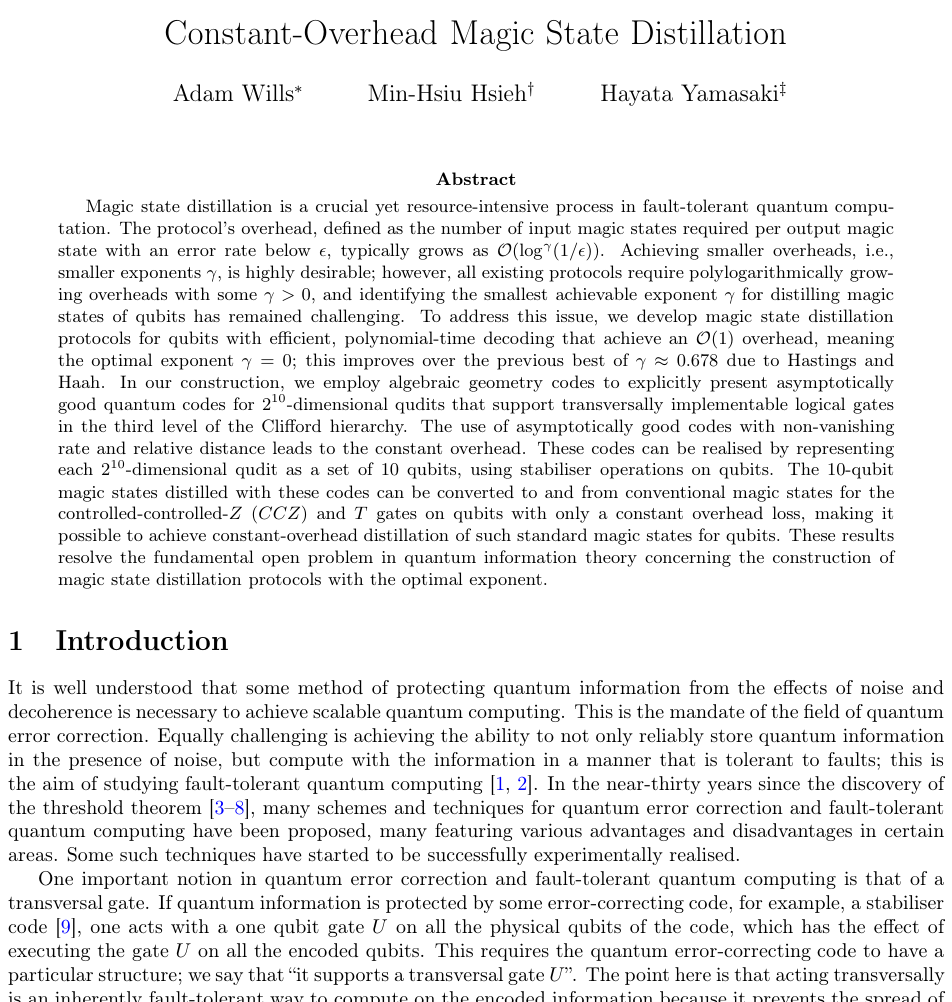

Under a quantum LPN hardness assumption, quantum codes combine pseudorandom encodings with resilience to a constant fraction of local errors.
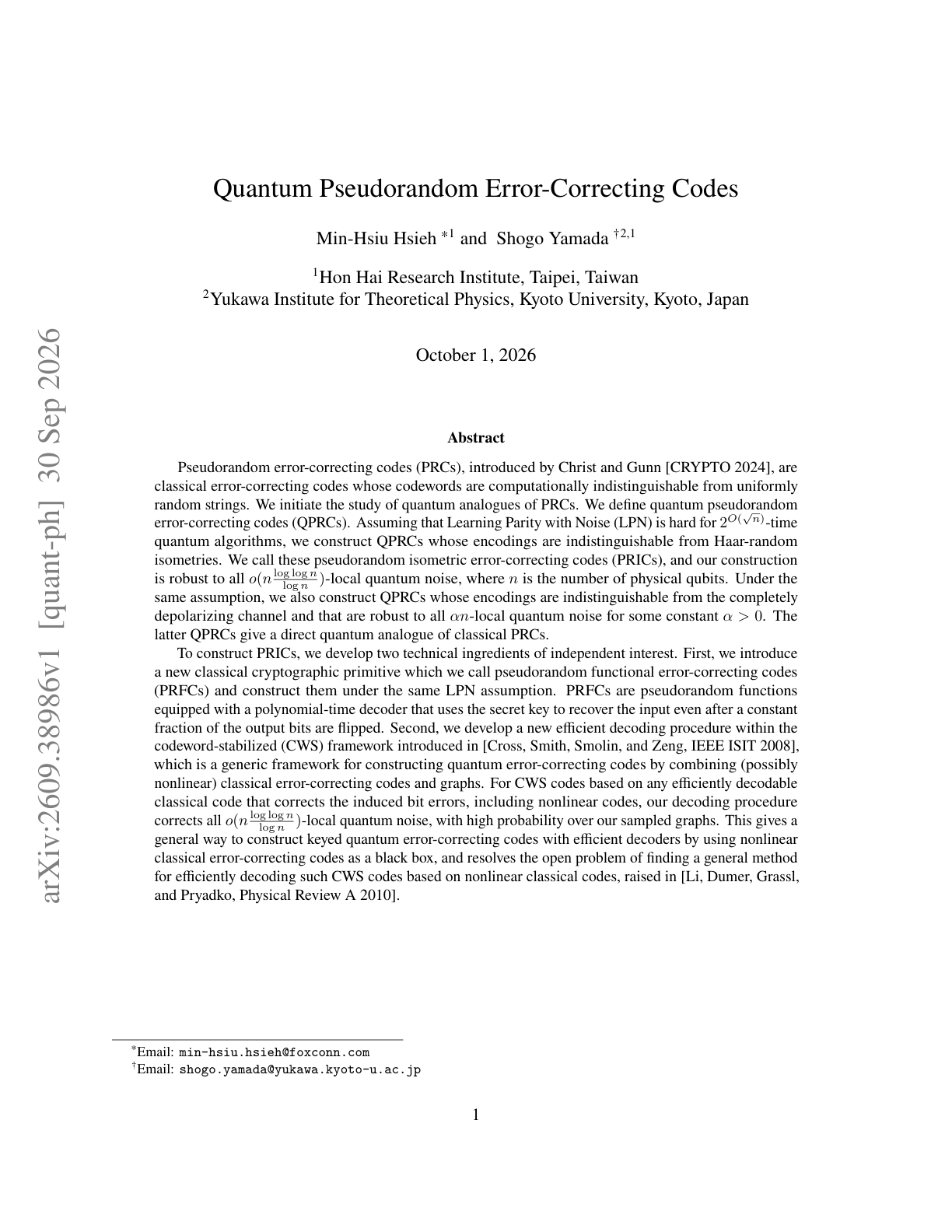
Timeline labels, from left to right:
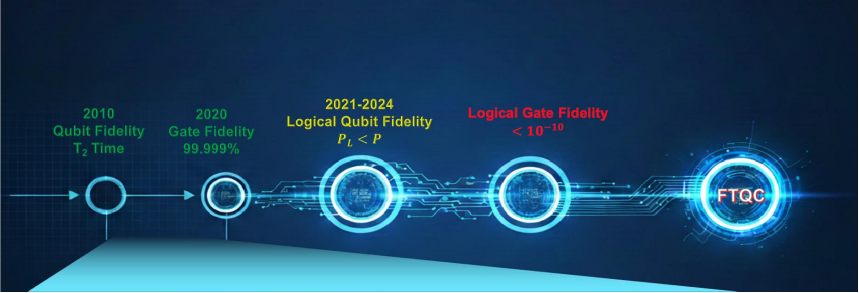
Today's Focus
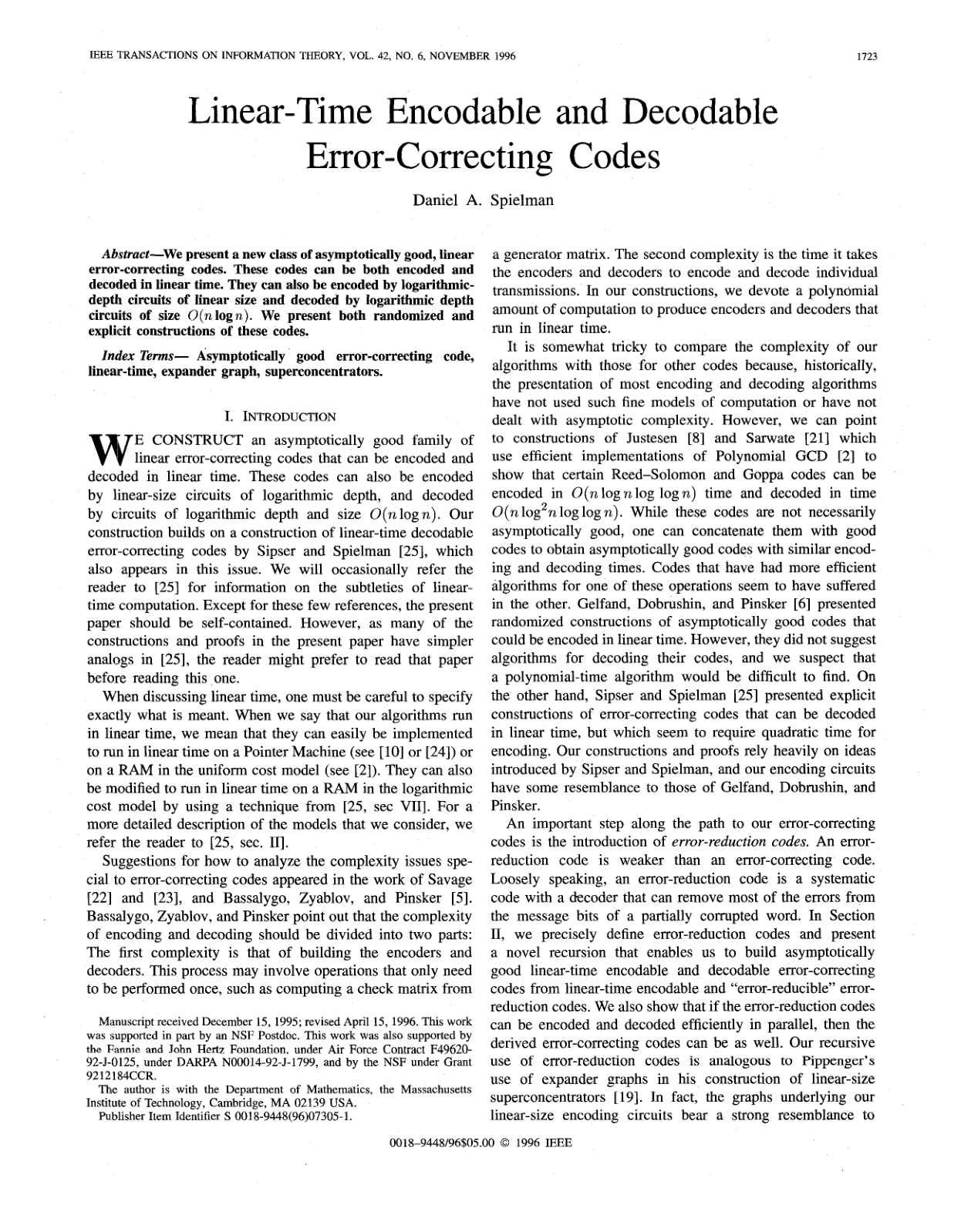
Asymptotically good classical codes can be both encoded and decoded in linear time.
Can this construction be generalized to quantum error-correcting codes?
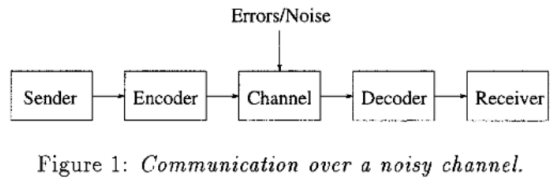
Sender → Encoder → Channel → Decoder → Receiver
Errors/Noise enters the Channel.
Figure 1: Communication over a noisy channel.
Spielman: Asymptotically good codes, all operations have linear complexity and run in logarithmic depth.
Main Results
Linear-Time and Log-Depth
Encoding / Unencoding / Decoding
Randomised and explicit constructions.
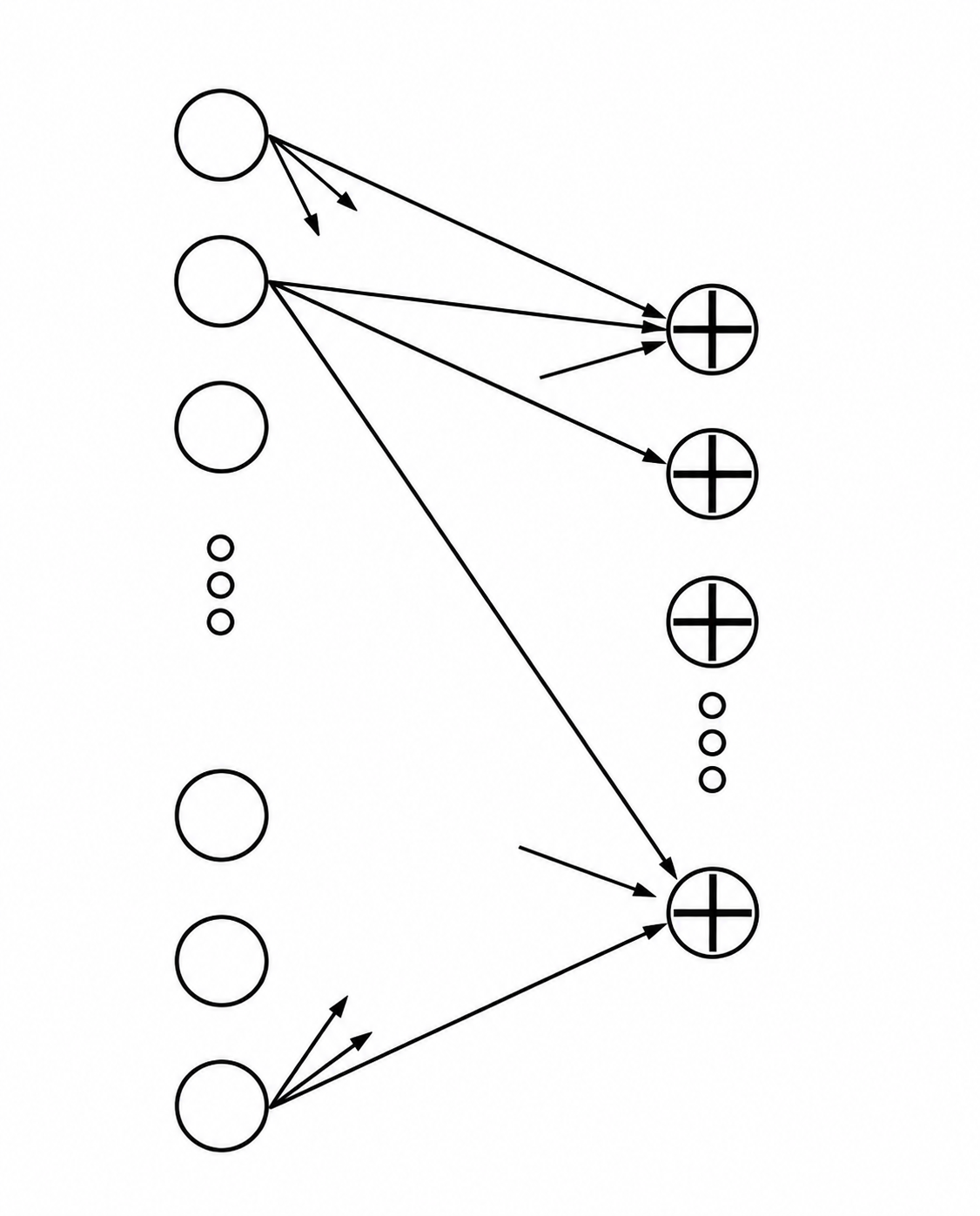
Start with a good expander code.
Encodable in
Constant Time.
Decodable in
Linear Time.
Expansion implies
Error Reduction
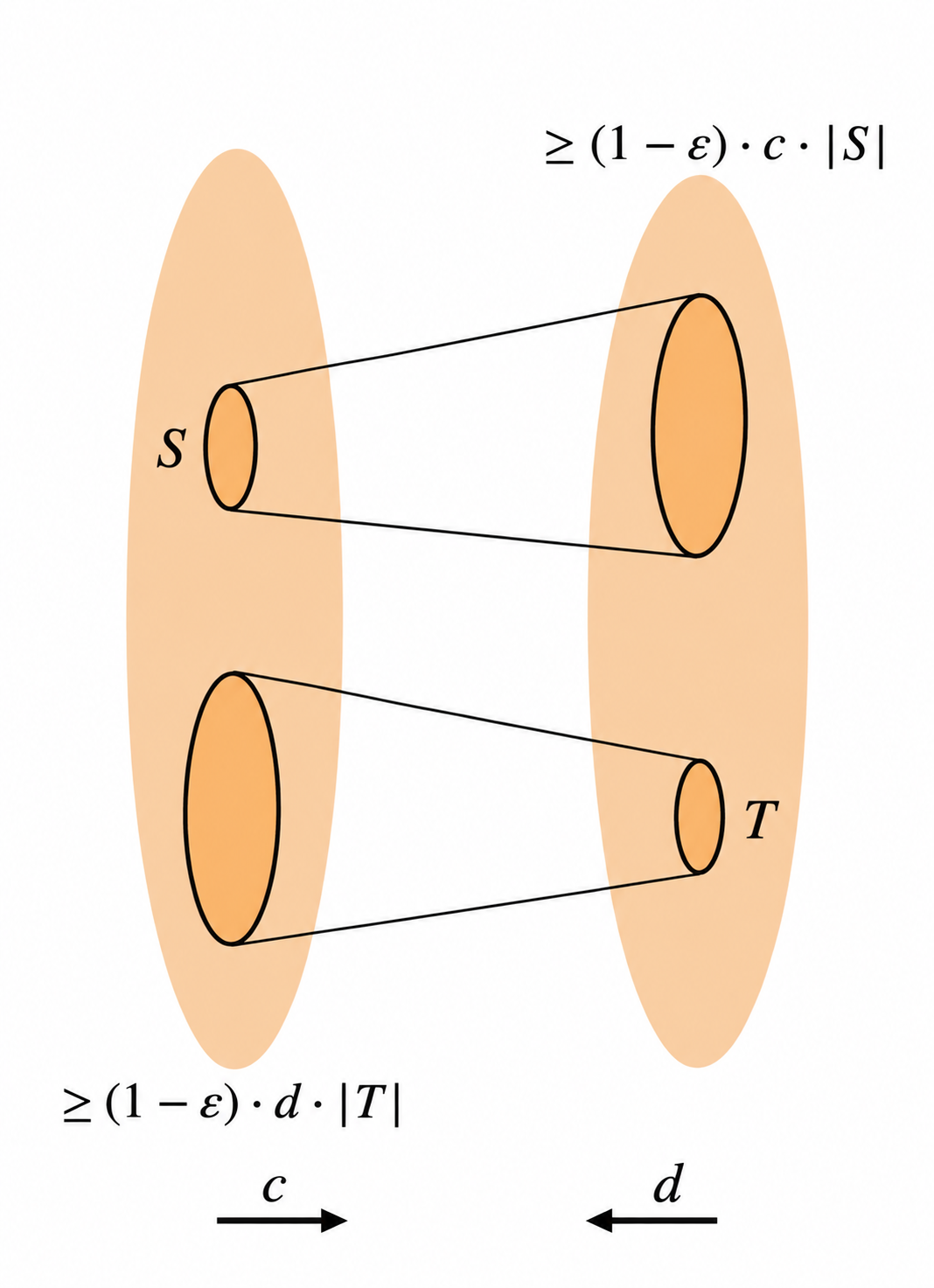
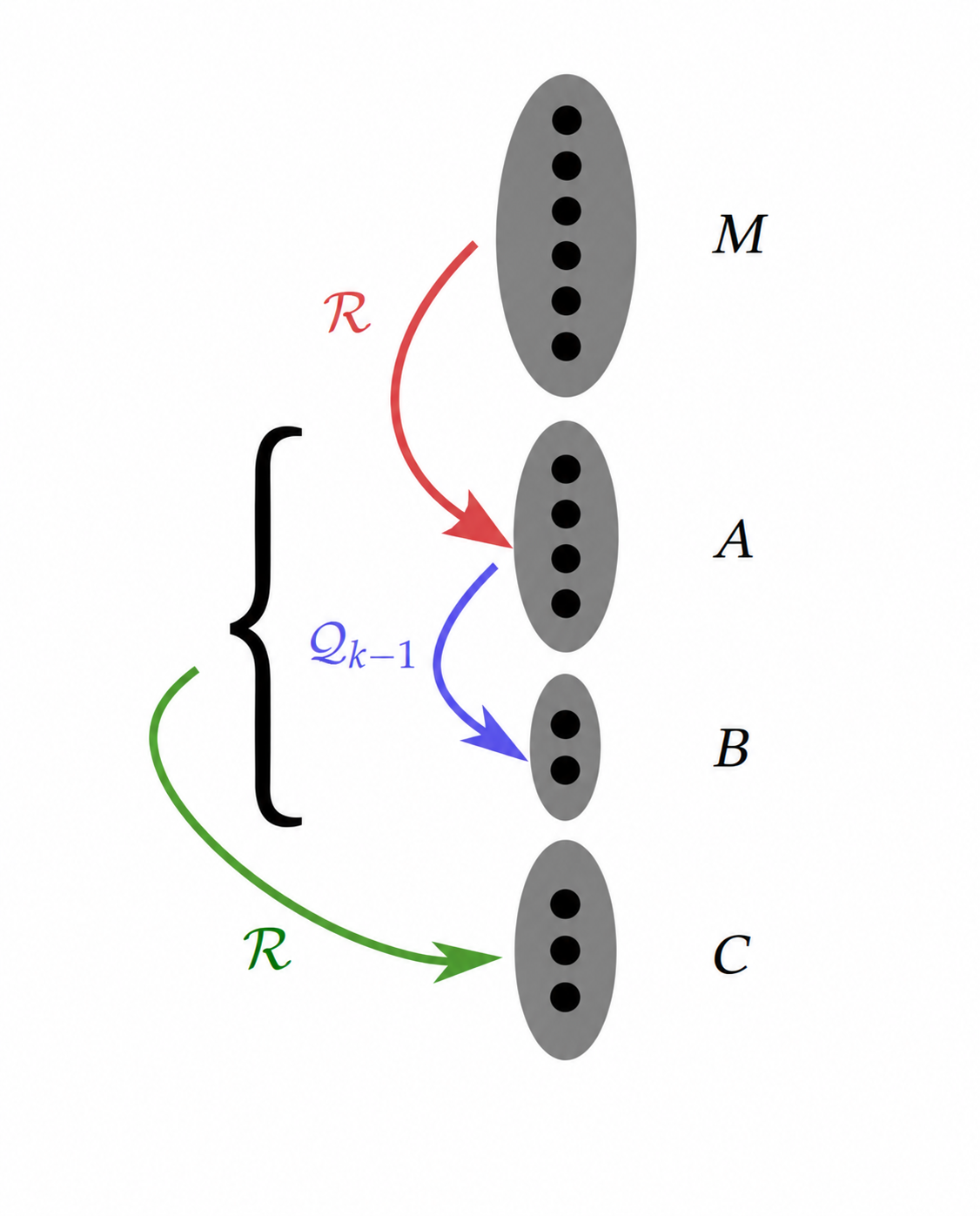
message bits; check bits.
→ This means they have constant distance!!
So what can they do?

message bits; check bits.
Suppose we get errors on message bits and errors on check bits.
Error Reduction if

: original block length
: fixed base-code length
: number of recursive steps
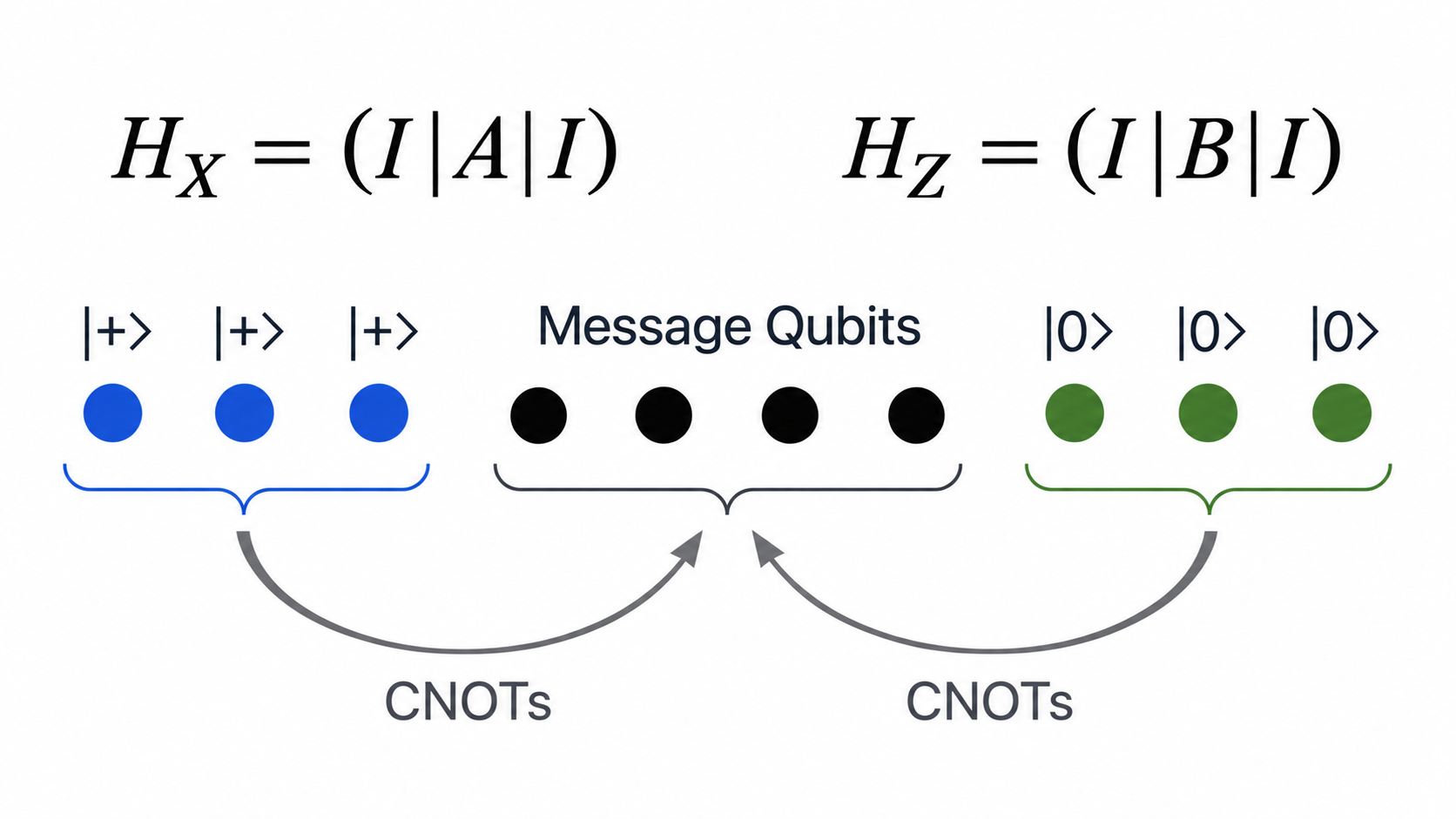
Need
commuting stabilizers!
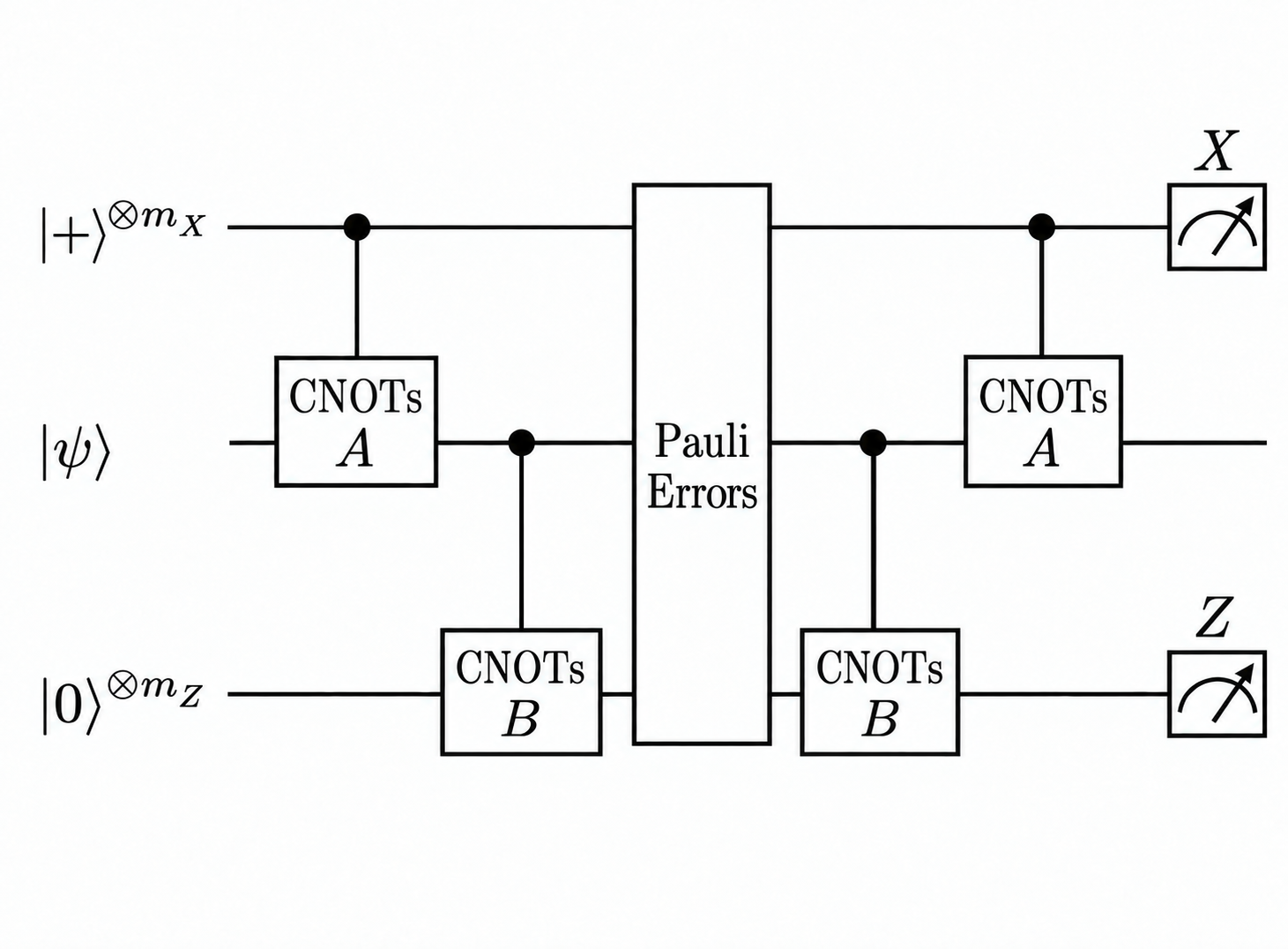
Avoid
error propagation!
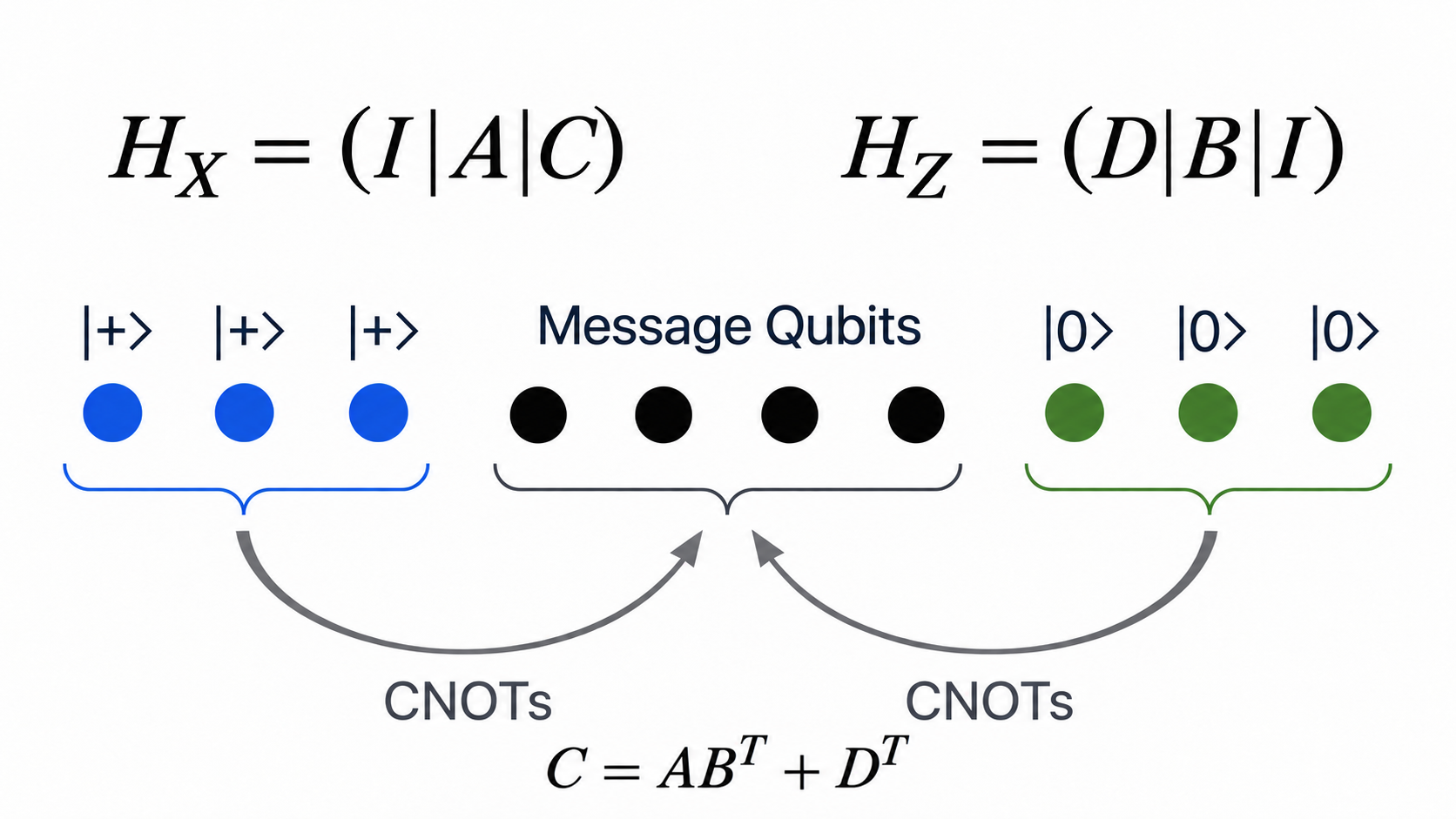
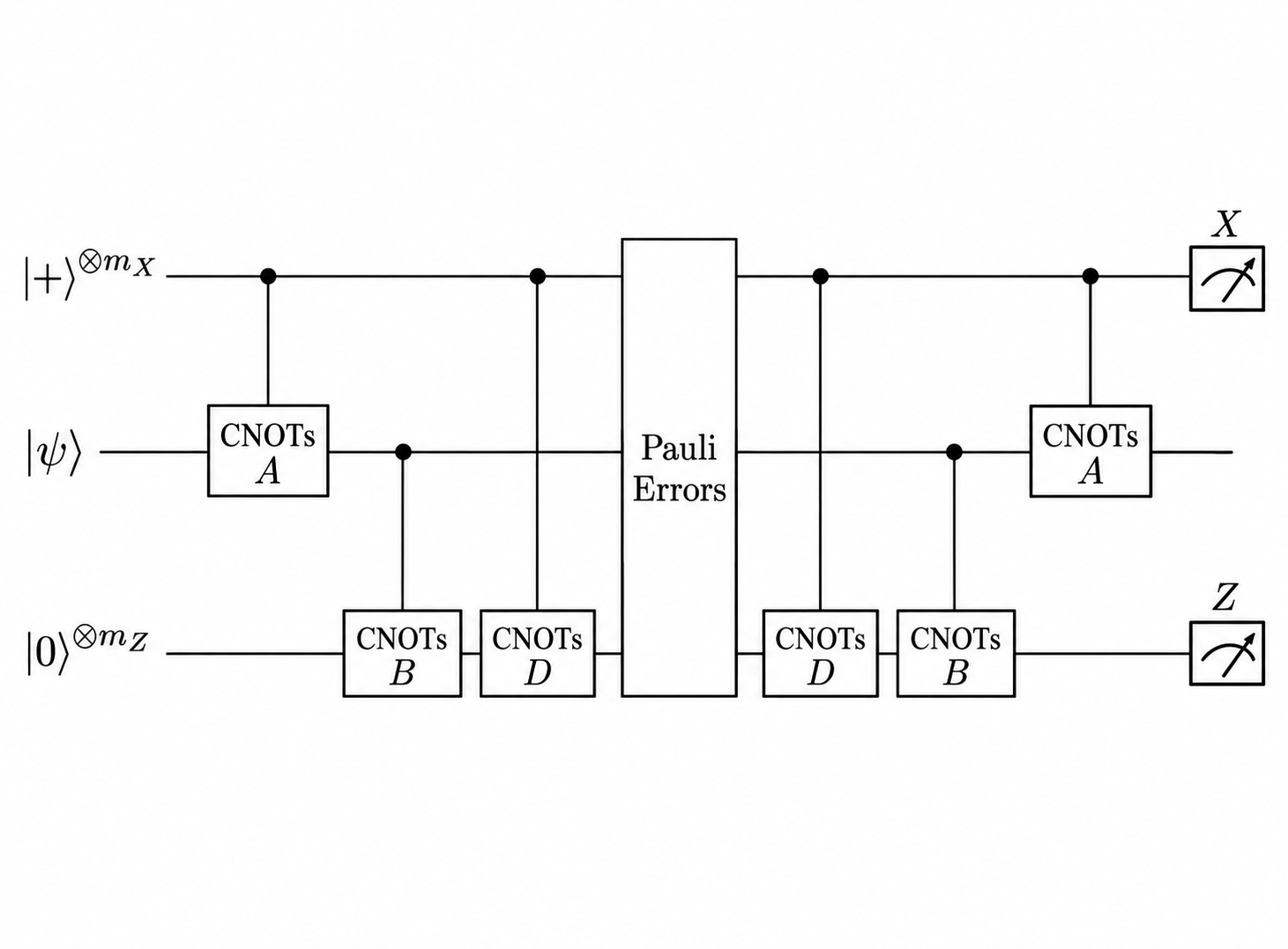
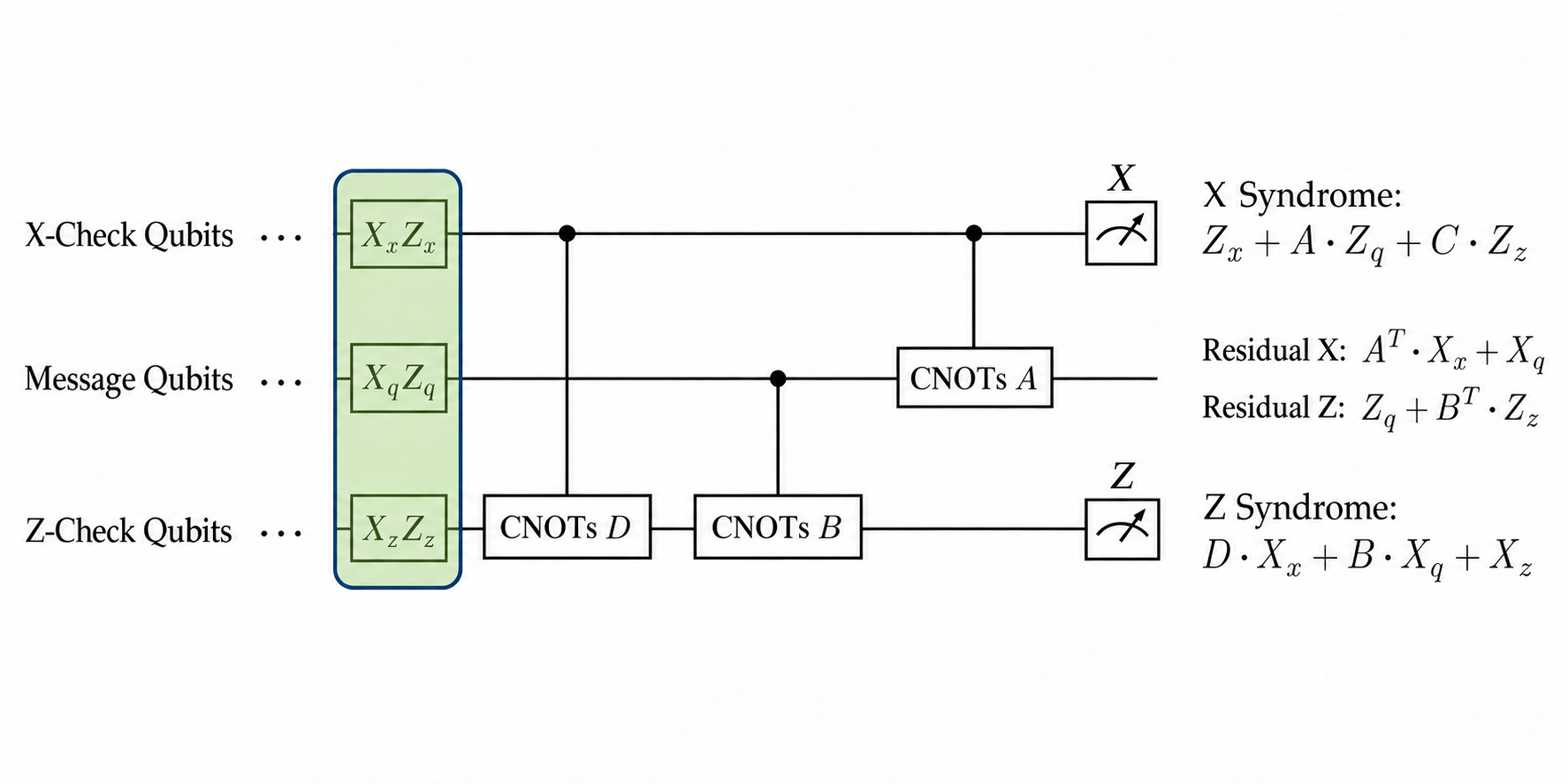
Reducing physical errors
controls the residual.
Reduction under must outweigh
amplification by .
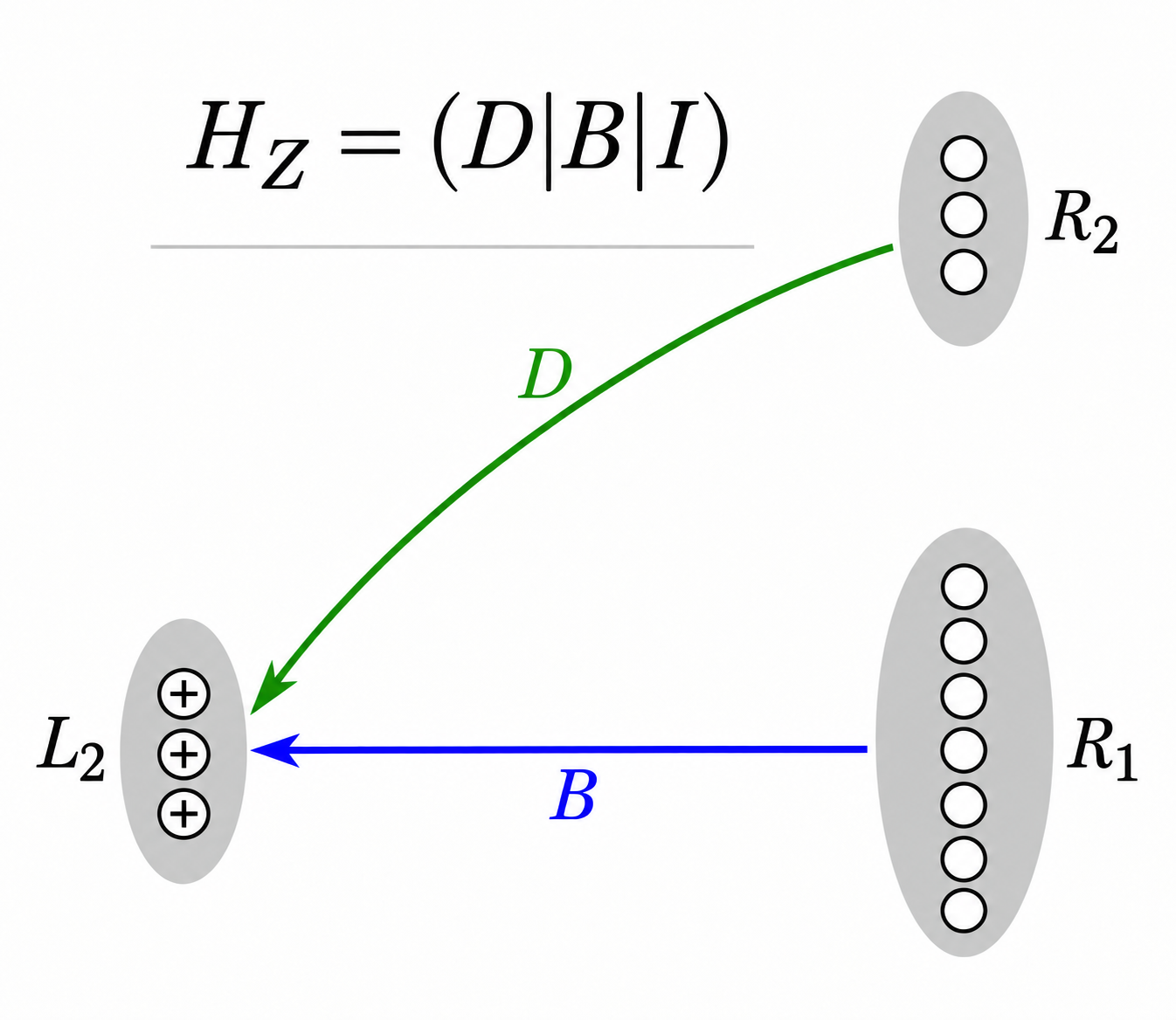
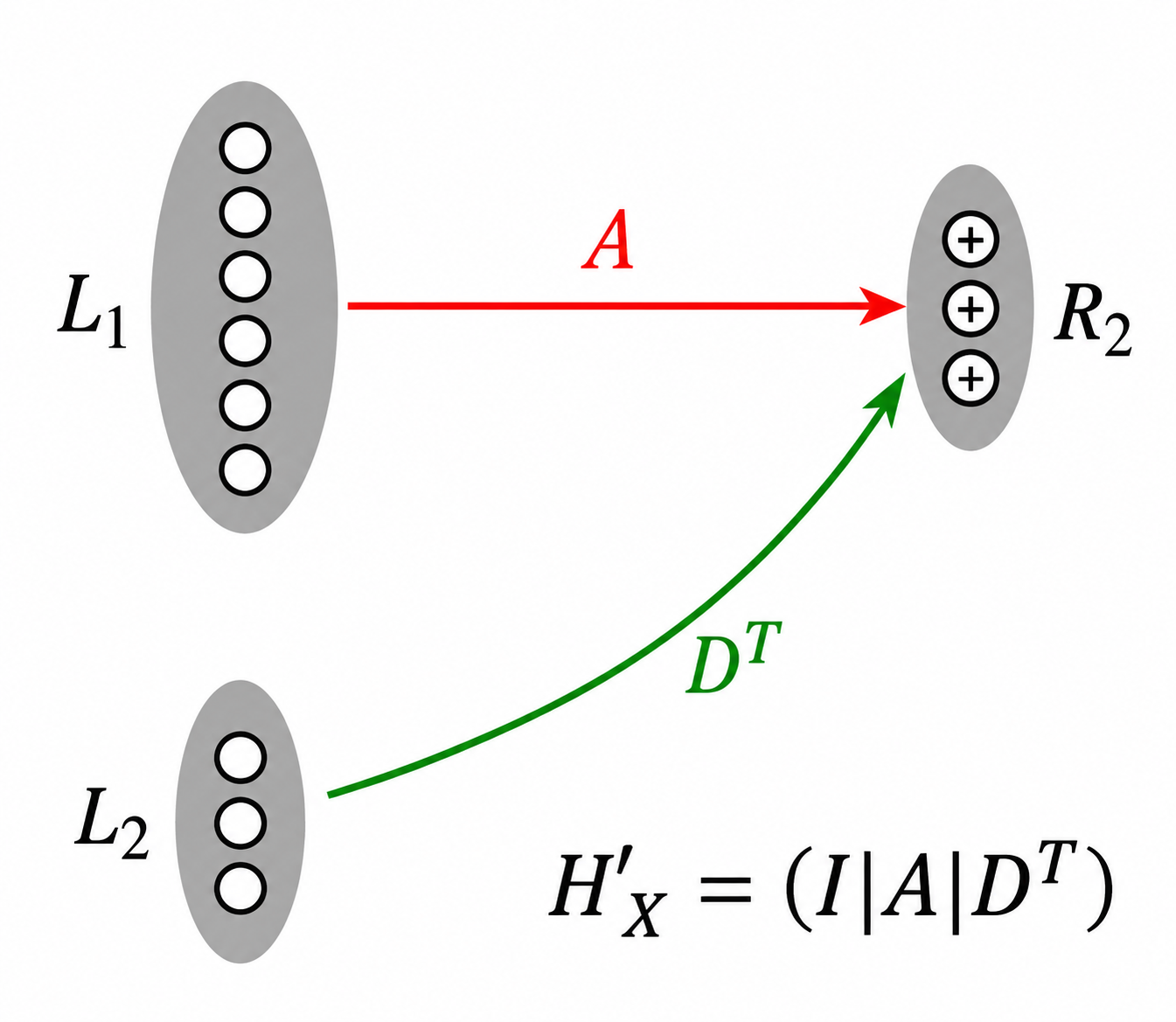
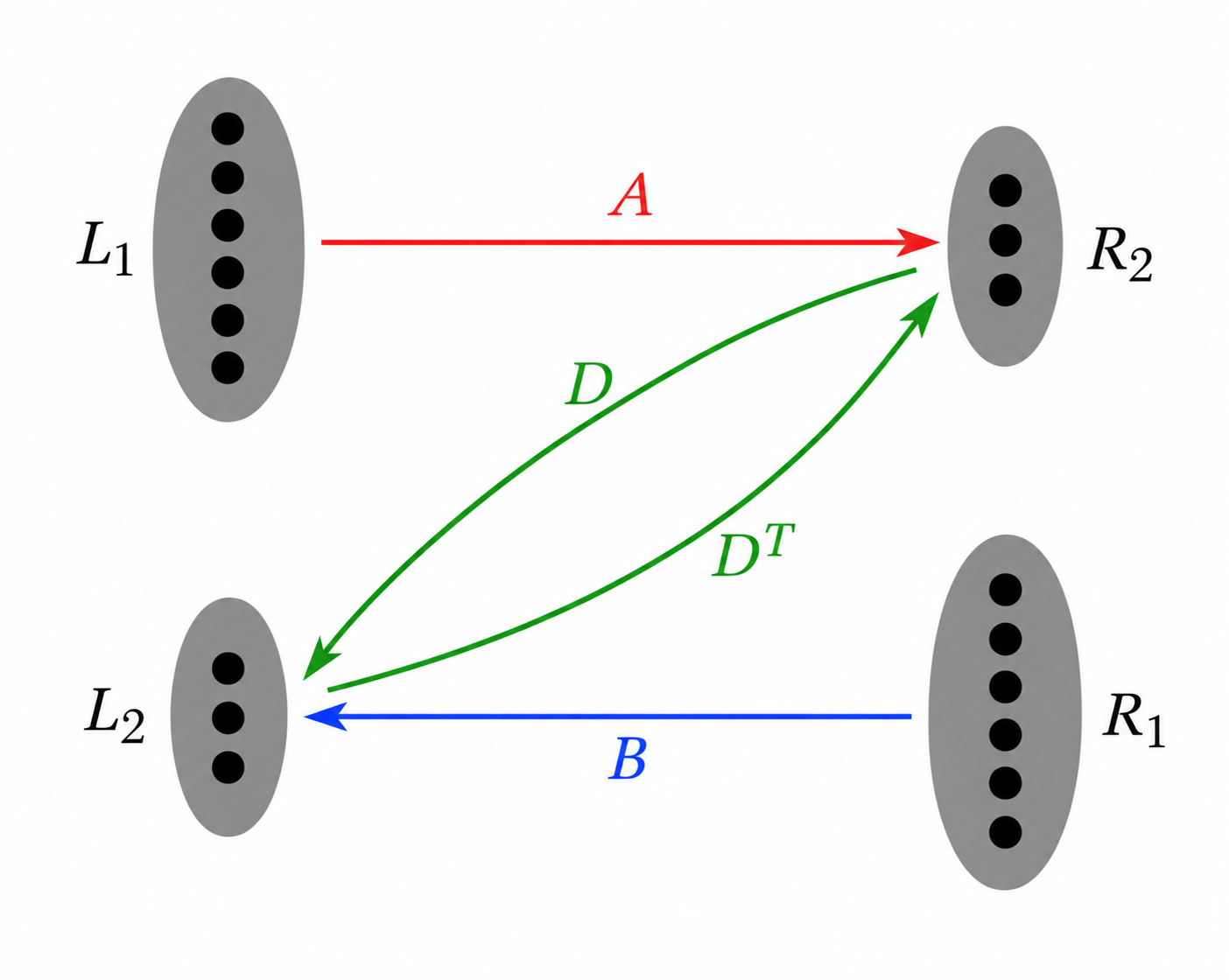
Reduce the residual Z error
directly.
Use to reduce .
The residual Z error is a decoder variable.
arXiv:2504.15087
arXiv:2603.04543 · FOCS 2026
MIT
UCSD
→ Stanford
MIT
→ UC Berkeley
HHRI